Saturday, December 1, 2012

The L Word Promotion: Offensive, or Not?

The picture above is a poster promoting the DVD release of season two of the hit TV show, The L Word. The L Word is a show following the love lives of a number of different lesbian women. It is a show that includes a lot of cursing, nudity, and sexual activity. Therefore, the appearance of the women on the poster-- each woman posing in a sexual manner, and dressed in revealing, suggestive clothing-- would not surprise anyone who follows the show. However, some could argue that the sexual way in which these women are presenting themselves could be offensive to women-- to lesbian women, especially. Some might argue that the sexual availability that is being portrayed in the poster gives lesbian women a bad image, and that it might cause the show's audience to gain a false knowledge of what lesbian women are really like in real life. However, some could also argue that heterosexual women are also portrayed in the same sexual manner in television and movie ads, and that the poster is not giving lesbians a bad image at all. Instead, it is over-sexualizing women in general. In short, whether or not someone finds this image offensive all depends on whether or not a person believes that over-sexualizing women in the media-- whether they be heterosexual or homosexual-- is an okay thing to do.

-Alyssa DiSabito

How Audiences Perceive Homosexuality

When a new television show comes out, it is always difficult to tell what the audience's reaction will be to what goes on in the show. The writers of any television show are very careful about the story lines they create, the characters they develop, and the ways in which they choose to portray each character. They are also careful about any topics that might be controversial-- one of these topics being sexuality. Degrassi is a popular Canadian television show that has featured many gay couples on it. At first, writers were worried about what the audience's reaction would be to seeing a gay couple on TV. However, the show's audience, consisting mainly of teenagers, embraced the homosexual relationships. There are thousands of fan videos online (on Youtube especially) dedicated to convincing the writers to keep these relationships going. The same is true for the audiences of shows like South of Nowhere, Skins:UK, Pretty Little Liars, Lost Girl, Gossip Girl, and many more.

-Alyssa DiSabito

How Sexuality Affects Spencer Carlin

In the television show South of Nowhere, a girl named Spencer Carlin moves from her small town in Ohio to Los Angeles, California, where over time, she meets another girl named Ashley. She eventually falls in love with Ashley, and realizes that she is gay. Spencer's sexuality affects her in many different ways, but the main way Spencer's sexuality affects her is through her relationships with different members of her family. When Spencer's mother found out that she was gay, she was very angry, and Spencer thought that it would destroy their relationship forever. The same thing happened with her brother Glen, who is in the video clip above. However, Spencer's mom soon realizes that Spencer is still the same person, and that she is happy, and the two of them have a better relationship afterward. In the clip above, Spencer is filming a video diary about coming out to her grandmother, and how it has affected their relationship. Coming out is a very big deal and a very hard thing to do, and I think that South of Nowhere portrays this difficulty very well, especially through Spencer and her storyline.

-Alyssa DiSabito

Sexuality in Television: From Past to Present

Will & Grace premiered in 1998, and ended in 2005. Will & Grace is one of the only shows on television that has had a gay main character. There have been other shows with gay main characters, such as South of Nowhere or Skins:UK. However, there is a difference between the use of sexuality in each of these shows. In the show Will & Grace, Will's story line is not completely based on the fact that he is gay. As you can see from this video clip, the fact that Will is gay comes up from time to time, as this fact if part of what makes the show interesting and different. However, the writers of Will & Grace are not primarily focused on Will's sexuality, or the sexuality of any of the other characters. In shows like South of Nowhere or Skins:UK, the plot of each episode is based on the fact that the main characters are gay or lesbian. That is the main difference between the use of sexuality in shows like Will & Grace, a show from the past, and South of Nowhere or Skins:UK, which are both shows from the later 2000's.

-Alyssa DiSabito

Friday, November 30, 2012

"Life As We Know It" Movie Poster: An Exhibit of Negative Gender Stereotypes


          The above picture is the movie poster for Life As We Know it starring Katherine Heigl and Josh Duhamel. It is about two god parents who didn't know the other existed until the parents of their godson die and they are responsible for raising the child together. The movie poster sums up the messages viewers get regarding gender and raising children: women naturally fall into the warm, caring, "mother" role, while men are portrayed as babies themselves, despite being well into their 20s and 30s. 

         In the poster, Heigl looks well put together. She is responsibly and happily following the baby with open arms, and paying attention to him. Duhamel is shown as an "adult" baby, in only white underwear and sneakers, and a bottle in his mouth. He is careless, easy going, and irresponsible and cannot get his life situated. Despite all of this, Heigl settles for a relationship with him, and they live "happily ever after".

          This can be seen as offensive to both men and women. Men are commonly presented in movies as juvenile and immature, especially when the situation involves traditional "female" roles, such as child-rearing, and it takes a woman and many, many years for them to realize that they are no longer children. Women could be offended by this because it makes it seem like, although they deserve more, they typically decide to settle for a lesser man and find his negative qualities endearing rather than annoying and insulting. On top of this, they will have to assume the role of parent and adult immediately and not be able to count on their male counterparts for support in the household.

          The gender stereotypes on display here are offensive and reprehensible, but it is not uncommon in films and television shows.
--Breana Swain

Stronger Female Leads, Stronger Female Viewers


It is proven that shows that have strong, independent females in lead roles, such as Law and Order: Special Victims Unit’s lead detective Olivia Benson, played by Mariska Hargitay, causes viewers to have higher opinions of women. Watching shows with powerful women has been proven to make women feel less anxious. Also, shows with passive female characters correlated with men having more negative attitudes towards females. On the contrary, men felt less anxious when watching shows with passive women, opposed to men who watched shows with strong women. This goes to show that women gain a lot from watching shows with tough women. It lets them know that they don’t have to be vulnerable or play the victim, and they do have power and can protect themselves. Men found it more comforting when women were vulnerable and submissive. Law and Order: SVU is a great example of a show that has overall very high ratings, and a very strong, female main character.
SVU's Olivia Benson

--Breana Swain

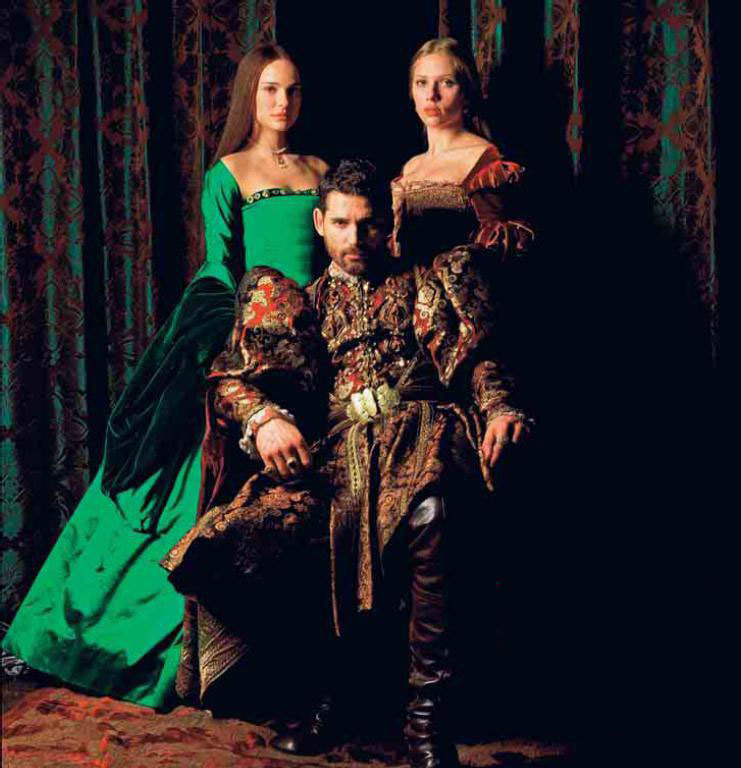
Mary and Anne Boleyn: Women's Roles in "The Other Boleyn Girl"


        (Mary and Anne Boleyn)

          “The Other Boleyn Girl” is a historical fiction movie depicting sisters Anne (Scarlett Johannsen) and Mary (Natalie Portman) Boleyn, who are pitted against each other to vie for the affection of King Henry VIII. Because Anne is a woman, she has no control over her fate and because Mary is a woman, she is exiled from the country for standing up for herself publicly. The stereotypes are inherent in the culture of Elizabethan England, and it wasn't seen as sexist in those times because it was the way things were run.    
This movie has a strong message that men, be it your husband, father, or lover, are in charge. The women's main jobs were to bear children, and acquiesce to men's wills. Mary Boleyn, the "good" sister, is forced by her father and her uncle to have sex with the King in order for him to have a male heir, despite her incessant pleas to not have to have an extra-marital affair and hurt her husband, the Kings wife, or her sister Anne, who was originally appointed to bear his children.  Her mother attempts to voice her opinions against this plan for the family to achieve a higher status in the county by saying that it was a bad idea and would ruin the family's reputation, but the men dismiss her thoughts. Not once are any women in this movie asked how they felt, because they are shown as mere subjects and pawns.
Anne was originally chosen to be the Kings mistress, but because she showed too much strength, he decides that he doesn't want her anymore and goes for the more willing, vulnerable sister. Anne is sent away to France to learn “proper female behavior”, all because she is a woman and women were not supposed to show self-will and independence.
Mary and Anne Boleyn had their lives completely ruined and were under the reign of the men in their lives all because of their gender.


(Anne Boleyn, Mary Boleyn, and King Henry VIII)

--Breana Swain